
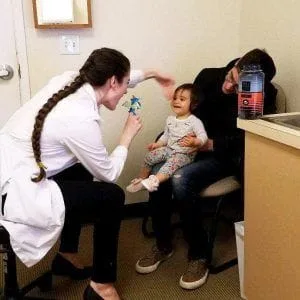
Extensive research has demonstrated the importance of the first few years of life in the development of vision. From birth, babies begin exploring the wonders in the world with their eyes. Even before they learn to reach and grab with their hands or crawl and sit-up, their eyes are providing information and stimulation important for their development. Healthy eyes and good vision play a critical role in how infants and children learn to see.
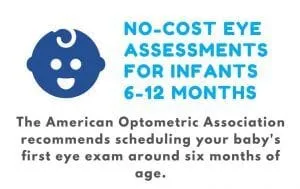
Children's eye care needs are very different from adults, but still require in-office assessments to evaluate whether your child's eyes are developing properly. We recommend a child’s first exam between 6 months and 1 year old, and annually starting at age 2. In addition, regardless of insurance coverage, every baby under 1 year old is welcome at Silicon Valley Eyecare for a no-cost comprehensive eye exam through the national Infant-SEE program.
Eye and vision problems in infants can cause developmental delays and may lead to serious lifelong effects on vision. It is important to detect conditions early to ensure babies and children have the opportunity to develop the visual abilities they need to grow and learn. Pre-school and school-aged children should continue annual exams to ensure healthy eyes and normal vision as they grow
Examples of Childhood Eye Problems
Children often do not realize that they cannot see well because they do not have a way to compare their vision with normal visual acuity. Therefore, it is very important to have your child visit our doctors to determine if your child’s eyes are developing normally and if they can see clearly.
- Color Blindness – Color blindness is the inability to see colors clearly. The most common type is red/green color blindness, but children can also be blue/yellow colorblind and completely colorblind. While there’s no cure, certain lenses and phone apps can help individuals cope with this eye condition.
- Childhood Cataracts – Babies can be born with cataracts and children can develop them. In severe cases, eye surgery may be needed.
- Depth Perception Problems – If your child has trouble with hand/eye coordination or catching or throwing balls, it could be due to a depth perception problem. When diagnosed early, glasses correction or vision therapy eye exercises may help improve depth perception.
- Eye Tracking and Teaming – Even if both eyes are seeing clearly, sometimes the eyes have difficulty working together as a team. By identifying this issue, our doctors can recommend glasses wear for certain activities, or refer you to a vision therapy office to help improve skills of eye tracking and teaming problems.
- Farsightedness – Farsightedness (hyperopia) is the inability to see objects up close. Children with farsightedness may hold objects, books and papers away from their face in order to see them more clearly. Corrective lenses can help with this refractive error.
- Nearsightedness – Nearsightedness (myopia) is becoming more common in children. This is the inability to see objects at a distance and may cause symptoms of squinting or leaning forward to see more clearly. Glasses or contact lenses can help correct this refractive error. In addition, as many children are quickly becoming more nearsighted, there are other interventions such as contact lenses and certain prescription eye drops that your child may be eligible for to help thwart the progression of their myopia.
- Eye Infections – Pink eye and styes are common childhood eye infections. Our optometrists can diagnose eye infections and recommend the appropriate course of treatment, including prescribing medicated eye drops.
- Strabismus – Crossed eyes occur in about 5 percent of children and can result in double-vision, poor eye teaming, or hindered eye development. Treatment can often be as simple as using prescription eye glasses, but can also involve vision therapy or surgical consultations.
- Lazy Eye – A "lazy eye" (amblyopia) usually develops prior to the age of six, and can be due to having one eye that is significantly weaker in vision than the other eye, either from a difference in refractive error (glasses prescription), eye turn, or possible eye disease. Various treatments are possible depending on the reason causing the lazy eye.
Pediatric Eye Exams with Our Doctors
Childhood eye exams can catch eye problems early so that they can be corrected before they affect your child’s ability to develop hand/eye coordination, learn, and read.
To schedule your child’s next comprehensive eye exam with our doctors to check for vision and eye health and movement problems, call us today at (408) 296-0511 .
